
pawnbroking guide
The Medieval Roots of Luxury Pawnbroking: From Lombard Street to Mayfair
How medieval Italian merchants, church law on usury and London’s Lombard Street laid the foundations for today’s discreet luxury pawnbrokers.
An idea older than money itself
Lending against a pledged object is one of the oldest financial arrangements we know of. Long before banks, cheques or credit files, a borrower could hand over something of value, receive money, and return later to reclaim it. Versions of the practice appear in ancient China, in the Greek and Roman worlds and across the medieval Mediterranean. Its appeal has always been its simplicity: the lender does not need to judge a borrower’s character or future income, only the worth of the thing on the counter, and the borrower risks the object rather than their reputation or liberty.
What changed over the centuries was not the core mechanism but the setting around it. The pledge might be a bolt of cloth, a silver cup, a sword or a gold ring. The lender might be a merchant, a monastery, a goldsmith or a prince’s financier. By the late Middle Ages, however, a recognisable profession had emerged in Europe, and its story runs directly through the City of London, where a single street still carries the name of the men who brought it there.
The problem of usury and the Church
Medieval Christian teaching treated usury, broadly understood as charging for the use of money, as sinful. Canon law and preachers returned to the theme repeatedly, and the prohibition shaped who could lend openly and on what terms. Yet kings, merchants and ordinary households all needed credit, and the demand did not disappear simply because theologians frowned on it. The result was a patchwork of workarounds, exemptions and tolerated specialists who filled the gap that doctrine had created.
Pledge lending sat in an ambiguous position within this system. Because the loan was secured on goods, some argued the lender was being paid for safekeeping, risk or delay rather than for money itself. Such distinctions mattered enormously to medieval moralists and lawyers, and they help explain why lending on pledges was often conducted by outsiders or by groups granted particular privileges. It also explains why, when charitable pawn banks later emerged in Italy, their founders took such care to justify any charge they levied.
Merchants from northern Italy
From the thirteenth century, merchants and bankers from the cities of northern Italy became the great financiers of medieval Europe. In England they were known collectively as Lombards, although many came from Tuscany and elsewhere rather than Lombardy itself. They traded wool, handled papal revenues, moved money across borders through bills of exchange and advanced funds to the Crown. Lending against goods was one strand of a much broader business built on networks of family firms, correspondents and agents stretching from Bruges to Florence.
Their prominence in London grew after Edward I expelled England’s Jewish community in 1290, a brutal act that removed one of the kingdom’s main sources of credit. Italian houses stepped into the space, lending to the monarchy on a vast scale. The relationship was lucrative but hazardous. Royal borrowers could be slow to pay or simply default, and several great Florentine firms were badly damaged in the fourteenth century when crowned debtors failed to honour their obligations.
How a street became a byword for finance
The Italians clustered in one part of the City, and the street where they did business became Lombard Street. It remains a banking address to this day, and the word Lombard entered several European languages as shorthand for lending. In English legal and commercial usage, a lombard loan came to mean a loan secured on movable property, and the phrase survives in central banking, where lombard facilities describe borrowing against collateral. Few professions can point to such a durable linguistic footprint.
Tradition also credits the Lombards with the emblem that later hung outside pawnbrokers’ shops across Britain: three golden spheres suspended from a bracket. The precise origin of that sign is debated and wrapped in legend, a story explored in its own right elsewhere in this series. What is clear is that by the early modern period, the association between Italian financiers, pledged goods and a particular kind of discreet, counter-based lending had become firmly embedded in English culture.
From goldsmiths’ shops to the modern counter
As the Italian houses faded from prominence, lending on pledges in England passed into other hands. Goldsmiths, who handled precious metal and valuables as a matter of course, were natural lenders against plate and jewellery, and some of their businesses evolved into early banks. Meanwhile, a separate trade of pawnbrokers grew up to serve ordinary households, taking in clothing, tools and domestic goods. The two strands, one wealthy and one working-class, would coexist for centuries with very different reputations.
That split matters for understanding the luxury pawnbroker of today. The popular image of the trade was shaped largely by the crowded Victorian pawnshop, with its bundles of Sunday clothes and anxious queues. Yet the older lineage, of merchants lending substantial sums against gold, gems and fine objects to people of means, never entirely disappeared. In a sense, the high-end pawnbroker is a return to the Lombard model rather than a reinvention of the Victorian one.
The line from Lombard Street to Mayfair
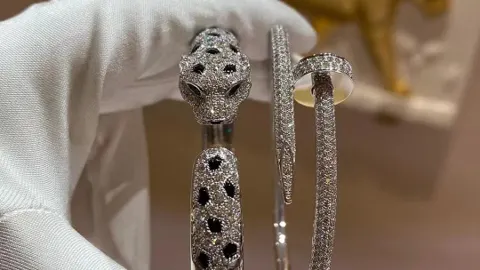
Walk from the City to the West End and the geography of the trade tells its own story. Where medieval lenders dealt in bullion, wool revenues and royal plate, the modern luxury pawnbroker in Mayfair or Knightsbridge is more likely to assess a steel sports watch, a signed diamond bracelet or a rare handbag. The appointment is private, the valuation expert and the agreement governed by the Consumer Credit Act 1974 and supervised by the Financial Conduct Authority. The mechanism, though, would be instantly familiar to a fourteenth-century Florentine.
For owners weighing up their options, the history is a reminder that pledging a valuable is a long-established financial tool rather than a last resort. It suits some situations better than others, and anyone considering it should read their credit agreement carefully and compare alternatives. Those who would rather sell outright than borrow can ask EncoreLuxe for a private valuation. Either way, the choice sits within a tradition that has quietly financed Europe for more than seven centuries.