
pawnbroking guide
Melt Value vs Design Value: How Pawnbrokers Price Gold Jewellery
Why a pawnbroker values most gold jewellery by weight and purity, when craftsmanship and a maker’s name add more, and how the gold price moves the loan.
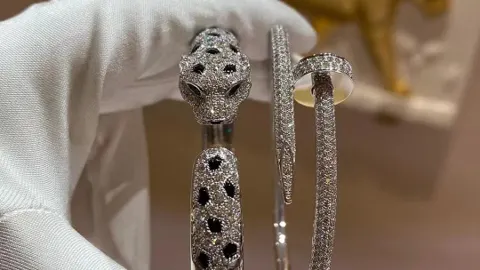
Two ways of seeing the same bracelet
Gold jewellery lives a double life. To its owner, a chain or bangle is an object of design, memory and taste. To a refiner, it is simply a quantity of fine gold alloyed with other metals, waiting to be melted and returned to the market as bullion. A pawnbroker stands between those two views, and much of the skill of lending against gold lies in deciding which of them applies to the piece on the counter.
For the great majority of everyday gold jewellery, the refiner’s view wins. The loan is anchored to what the metal would be worth if melted, because that is a floor the lender can always rely on. For a smaller group of pieces, design, craftsmanship or a famous signature lifts the resale value well above scrap, and a thoughtful lender will recognise and pay for that difference. Telling the two groups apart quickly and fairly is one of the most practical skills a pawnbroker develops, and one of the most visible to borrowers.
The arithmetic of melt value
Melt value begins with three numbers: the weight of the piece, the purity of the gold, and the prevailing price of fine gold. Purity in the UK is expressed in parts per thousand. Nine carat gold is 375, meaning 37.5 per cent pure gold; 14 carat is 585; 18 carat is 750; 22 carat is 916. Multiplying the weight by the purity gives the quantity of fine gold, and multiplying that by the market price gives a theoretical value.
In practice nobody receives the full theoretical figure. Refiners charge for processing and take a margin, and the lender must allow for the gold price moving during the loan. Weight also has to be adjusted for anything that is not gold: stones, enamel, steel springs in clasps, or the solder and base metals in poorly made pieces. The resulting net figure is the foundation on which a gold loan is built. Borrowers who understand these deductions are rarely surprised when the offer falls short of the figure a simple online calculator suggests.
Testing what the metal really is
Before any sum is calculated, the lender needs confidence about purity. A British hallmark from an assay office is strong evidence, and many pawnbrokers begin there. They will still test, because hallmarks can be forged, pieces can be repaired with lower-carat metal, and a great deal of older or imported jewellery carries only a stamped number, which is a maker’s claim rather than an independent guarantee. Stamps such as 18K or 750 applied abroad may be accurate, but the lender has no independent assurance that they are.
Traditional acid testing on a touchstone remains in use, alongside electronic testers and, increasingly, handheld X-ray fluorescence analysers that read the surface composition in seconds without damage. Each method has limits. Gold-plated or gold-filled items can fool a superficial test, which is why a careful lender may file a discreet notch or test in more than one place on heavier pieces. These checks protect the lender against fraud and the honest borrower against being underpaid. A good lender will usually tell you which method it has used and what the result showed.
When design is worth more than the gold
Some gold jewellery commands prices far above its metal content. Signed pieces from celebrated houses, work by notable designers, fine antique jewellery and pieces with exceptional craftsmanship, such as intricate chains, enamelling or engraving, can sell to collectors and dealers at a substantial premium. In these cases, valuing by weight alone would seriously undervalue the item, and a borrower is entitled to expect the lender to recognise it. Chains by respected makers, fine Victorian goldwork and well-known modern designs are typical examples of pieces worth pausing over before any scales come out.
The difficulty is that design value is less certain than melt value. It depends on fashion, condition, provenance and finding the right buyer, and it can fall as well as rise. A pawnbroker will therefore usually lend on a blend: a secure base tied to the metal, plus a more cautious allowance for the premium the piece could command. The stronger the evidence of authenticity and demand, the more of that premium can be counted. Borrowers who suspect a piece has design value should say so at the outset, as it may warrant a closer look.
How the gold price ripples through the loan
Because so much gold lending is anchored to bullion, the spot price has a direct influence on what a borrower is offered. When gold is strong, the same bracelet supports a larger loan; when it falls, offers fall with it. Many pawnbrokers review their gold rates frequently, sometimes daily, to keep pace with international markets, which are priced in US dollars and so also move with sterling’s exchange rate. A weaker pound can therefore lift sterling gold prices even when the dollar price is flat, and a stronger pound can have the opposite effect.
For lenders, the risk runs throughout the life of the loan. If gold drops sharply after money has been advanced, the safety margin narrows, which is one reason loans are set at a fraction of value rather than the full amount. For borrowers, it means timing can matter. The same piece valued a few months apart may attract noticeably different offers, without anything about the jewellery itself having changed. Borrowers who plan to redeem are, of course, largely insulated from these swings once the loan has been agreed.
Getting a fair assessment of your gold
Borrowers can make the process smoother by knowing what they own. Check for hallmarks, keep receipts or certificates for signed pieces, and separate genuine gold from plated costume jewellery before a valuation. If a piece has design value, say so, and bring any evidence of its maker or age. A good lender should explain how the figure was reached, including the weight and purity it used. Transparency of this kind is a good sign; a lender reluctant to show its workings deserves a little more scrutiny.
It is also worth comparing more than one regulated pawnbroker, because rates for gold and approaches to design premiums differ. Read the credit agreement to understand the interest charged, the redemption period and what happens if the loan is not repaid. A loan secured on gold can be a straightforward form of short-term credit, but it is still credit, and the total cost deserves as much attention as the headline sum. Knowing both figures lets you judge whether the arrangement is genuinely worthwhile.