
pawnbroking guide
Risk Management Behind the Counter: Fakes, Fraud and Price Falls
How luxury pawnbrokers manage the risks of counterfeits, fraud, stolen goods and falling prices, and why those safeguards shape every loan offer.
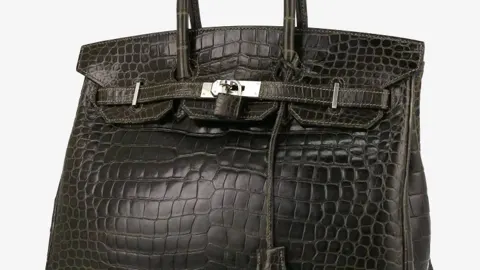
Every loan is a calculated risk
Lending money against an object sounds safe. If the borrower does not repay, the lender simply sells the item. In practice, luxury pawnbroking involves a surprising number of ways for that comfortable assumption to fail. The item might be fake, stolen or altered. Its market price might fall during the loan. It might be damaged or lost while in the lender’s care. Each possibility has to be anticipated and managed. Good lenders treat that risk as part of the service, not a burden to pass on.
Risk management is therefore woven through every stage of a pawnbroker’s work, from the first glance at an item to the moment it is returned or sold. Much of it is invisible to the customer, but it explains many of the questions asked, the documents requested and the size of the offer made. Understanding it can make the whole process feel less mysterious. Each safeguard exists because, at some point, a lender somewhere learned the lesson the hard way.
The counterfeit problem
Counterfeiting is perhaps the most obvious hazard. High-quality replicas of luxury watches and handbags have become increasingly convincing, and some are sophisticated enough to deceive casual inspection. A lender who advances money against a fake has no real security at all. Unsurprisingly, authentication is the first line of defence, carried out by staff with specialist knowledge and, for higher-value pieces, supported by external experts. Where there is any doubt, a responsible lender will decline rather than gamble.
More subtle than outright fakes are items that are genuine in part. A real watch case may house a replacement movement or an aftermarket dial; a diamond ring may carry a stone that has been swapped or treated; a handbag may have been refurbished with non-original components. These alterations can dramatically reduce value and liquidity, so valuers look beyond the brand name to the originality of every component. Opening a watch or testing a stone is often the only way to be sure.
Stolen goods and fraudulent borrowers
A pawnbroker must also guard against lending on goods the customer does not own. Accepting stolen property is not only a financial risk, since the rightful owner may be entitled to recover it, but a serious legal and reputational one. Lenders verify identity, record serial numbers and descriptions, and may check items against databases of reported stolen property. Unusual behaviour or inconsistent stories prompt further questions. Rightful owners can sometimes reclaim their property even after a loan has been made against it.
Anti-money laundering obligations add another layer. Under the Money Laundering Regulations, businesses dealing in high-value goods must understand who they are dealing with and look out for suspicious activity. For pawnbrokers, that can mean asking where an item came from, how it was acquired or why a large loan is needed. Legitimate customers may find such questions intrusive, but they protect the integrity of the trade. Declining a doubtful transaction is always cheaper than explaining one later.
When the market moves against the lender
Even a genuine, legitimately owned item can become a problem if its market value falls. Prices for pre-owned luxury watches, handbags and jewellery are not fixed; they respond to fashion, supply, investor sentiment and the wider economy. Models that were once scarce can become plentiful, and prices that climbed quickly can retreat just as fast. A loan that looked conservative at the outset may be less comfortable a few months later.
Pawnbrokers manage this through loan-to-value ratios, lending only a proportion of what they expect to realise in a sale. They may apply more caution to items whose prices have recently surged, or to niche pieces with a thin market. Diversifying the loan book across different types of collateral, and watching the market continuously, helps prevent a fall in one category from threatening the whole business. Lenders who remember past corrections tend to lend more steadily through future ones.
Custody, damage and insurance
Once a pledge is accepted, the lender becomes responsible for keeping it safe. Secure vaults, alarm systems, careful handling procedures and specialist insurance are all part of this. Items are typically recorded in detail on arrival, including photographs and a note of existing wear, so that there is a clear reference if questions arise about condition when the pledge is later collected. Clear records protect the customer as much as the lender.
Different goods need different care. Watches may need protection from magnetism and knocks; handbags need suitable temperature, humidity and padding to avoid creasing or discolouration; jewellery must be stored so that stones and metals do not scratch one another. Borrowers are entitled to ask how their item will be stored and insured, and a reputable lender should answer clearly. Insurance terms, including the limits of cover, should be set out clearly.
How risk shapes the offer you receive
All of this has a direct effect on the customer. The more confident a lender feels about authenticity, ownership and resale, the more generous its offer is likely to be. Original boxes, papers, receipts and service records reduce uncertainty, while missing documentation or signs of alteration increase it. Offers that seem cautious often reflect genuine risk rather than meanness. Honest disclosure of any repairs or replacement parts also builds trust and avoids later surprises.
Borrowers can help themselves by presenting items honestly, gathering documentation and asking how the valuation was reached. Reading the credit agreement and comparing lenders remains essential. And for owners who decide that selling is simpler than borrowing, EncoreLuxe offers private valuations. Either way, a well-managed transaction protects both sides, which is exactly what good risk management is for. Clarity on both sides is the best defence against disappointment. A good lender will welcome the questions.