
pawnbroking guide
American Pawn Shops vs British Pawnbrokers: Culture and Regulation
How American pawn shops and British pawnbrokers differ in culture, law and practice, from state-by-state rules to FCA authorisation and pledge rights.
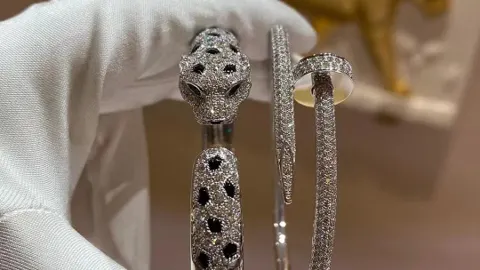
Same golden balls, different worlds
Hang three golden balls above a door in Leeds or Las Vegas and most passers-by will know what goes on inside. The symbol crossed the Atlantic with European settlers, and the basic contract crossed with it: a customer hands over an object, receives cash and has a set period to repay and reclaim it. Yet the American pawn shop and the British pawnbroker have grown into noticeably different businesses, shaped by distinct legal systems, retail habits and popular images.
The differences are more than cosmetic. They affect who uses pawnbrokers, what can be pledged, how the loan is regulated and what happens when it is not repaid. For anyone who has absorbed their idea of pawnbroking from American television and then walks into a British premises, or vice versa, the contrast can be striking. Understanding it also sheds light on why the UK trade has increasingly positioned itself as a regulated financial service rather than a general store with a lending counter.
Fifty states, fifty rulebooks
The most fundamental difference is structural. In the United States, pawnbroking is regulated primarily at state level, and sometimes by cities and counties as well. Each state sets its own rules on licensing, maximum charges, the length of the loan and any grace period, and the requirements for holding and reporting goods. Federal law adds a layer on top, notably disclosure requirements under truth-in-lending rules, and some federal protections for particular groups such as serving members of the armed forces.
The result is a patchwork. A loan that is permissible in one state may be capped differently a few miles across the border, and terms such as the grace period before forfeiture vary considerably. Many American jurisdictions also require pawn shops to upload details of incoming goods to databases that police can search, a practical response to concerns about stolen property. The absence of a single national rulebook means that generalisations about American pawnbroking always need a caveat about local law.
One national framework in the UK
Britain, by contrast, has a single framework. Pawn loans are regulated consumer credit under the Consumer Credit Act 1974, and pawnbrokers must be authorised by the Financial Conduct Authority, which took over consumer credit regulation in April 2014. The rules are the same whether the pawnbroker operates in Cornwall or Caithness. Borrowers receive a regulated credit agreement and a pawn receipt, and the pawnbroker is subject to FCA rules on affordability, fair treatment, advertising and complaints handling.
Several protections are built into the statute itself. The redemption period must be at least six months, and the borrower can redeem at any point before the pledge is actually sold, even after that period has ended. For pledges above a statutory value threshold, the pawnbroker must give notice before selling and must account for any surplus once the sale is complete. Money Laundering Regulations also apply to high-value dealing. The UK National Pawnbrokers Association adds a code of practice for its members.
Guitars, tools and firearms versus diamonds and watches
Browse a typical American pawn shop and you will find a remarkable variety of stock: electric guitars, power tools, games consoles, jewellery and, in many states, firearms. Handling guns requires federal licensing, and a significant number of American pawn shops hold one. Many shops operate as much as second-hand retailers as lenders, buying goods outright and running busy sales floors. The general-store feel is part of their appeal, and bargain hunting is a recognised pastime.
British pawnbroking has become narrower in what it accepts. Gold and diamond jewellery has long been the core of the trade, and watches are central at the upper end of the market. Electronics are taken by some high-street operators, but firearms play no part in the British business. The luxury end has grown more specialised still, concentrating on prestige watches, signed jewellery and designer handbags where specialist knowledge adds value and resale routes are well established. The emphasis is on the loan rather than the shop floor.
Reality television and the image problem
American pawn shops have enjoyed an unusual image boost from reality television, which turned haggling over antiques and curiosities into mainstream entertainment. Those programmes presented pawnbroking as colourful and slightly roguish, with the owner as a shrewd dealer and the customer as someone hoping to turn an heirloom into a windfall. The emphasis on outright buying and on unusual objects was entertaining, but it arguably blurred the distinction between lending and dealing in the public mind.
British pawnbrokers have fought a different image battle. Here the old associations were with Victorian poverty and, in more recent decades, with high-cost credit. The industry’s response has been to stress regulation, transparency and discretion, and to present the pawn loan as a sensible, asset-backed form of borrowing. At the luxury end, premises increasingly resemble private banks or jewellers’ salons. The American trade sells itself partly as spectacle; the British trade sells itself largely on trust and respectability.
What the comparison means for borrowers
The practical point for British readers is that American stories, anecdotes or online advice about pawnbroking rarely translate directly. Holding periods, charges, forfeiture rules and the treatment of surplus proceeds all depend on the jurisdiction. In the UK, the Consumer Credit Act and FCA rules define your rights, and the credit agreement you sign sets out the specific terms. It is worth reading every line, asking questions about the total cost and comparing more than one lender before deciding.
It is also worth asking whether borrowing is the right answer at all. For some owners, particularly those who no longer wear a watch or piece of jewellery, a sale may be simpler than a loan with interest. Neither route is automatically better, and circumstances vary. Those who would prefer to explore selling outright can obtain a private valuation from EncoreLuxe, which buys luxury pieces and does not lend, before making any decision.