
pawnbroking guide
Pawning a Rolex: What Lenders Look For
What a specialist lender examines before advancing money against a Rolex, from reference and serial to bracelet stretch and aftermarket parts.
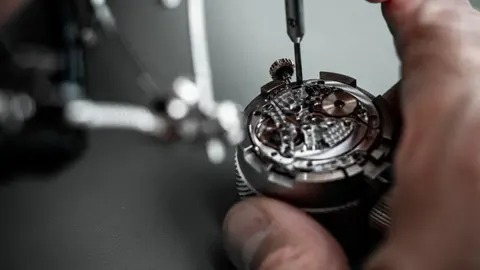
Why the crown is the pawnbroker’s favourite watch
Ask almost any specialist lender which watch they would most like to see come across the counter and the answer is usually the same. Rolex is not the most complicated watch in the world, nor always the most expensive, but it is the most liquid. There is a deep, international secondary market for its models, prices are widely tracked, and buyers exist for almost every reference in almost every condition. For a lender, that liquidity is the whole point, because a pledge is only as good as the ease with which it could be sold if the loan were never repaid.
That confidence shapes the entire conversation. A lender assessing a Rolex is not really asking whether it is beautiful or whether it means something to the owner. They are asking three quieter questions: is it genuine and original, what would it realistically fetch in a sale, and how quickly could that sale happen? Everything they inspect, from the reference number to the tightness of the bracelet, feeds into those answers. Understanding the checklist helps an owner see why two watches that look similar across a room can attract very different offers.
Reference, model and the pecking order of demand
The first thing a lender establishes is exactly which watch is in front of them. Rolex identifies each model by a reference number, and the difference between references can be significant: a particular bezel material, dial colour or bracelet can move a watch from steady demand to a waiting list. On older pieces the reference is engraved between the lugs at twelve o’clock; on modern watches the serial number appears on the inner bezel ring, or rehaut, and the lender will match both against the model’s known features.
Within the catalogue there is a broad pecking order. Steel professional models such as the Submariner, GMT-Master II and Daytona tend to be the most sought after, followed by the Datejust and Day-Date, whose appeal depends heavily on metal, dial and bracelet. Discontinued references can go either way: some become collectable, others simply become older. Lenders also watch for current market sentiment, since the premium a model commands over its retail price has risen and fallen noticeably in recent years, and a prudent lender bases its advance on sober figures rather than peak ones.
Originality: the parts that must belong
A Rolex is a system of parts, and lenders want every one of them to be correct. The dial, hands, bezel insert, crown, crystal, bracelet and clasp should all be appropriate to the reference and, ideally, to the period of manufacture. Watches that have been assembled from mismatched components, sometimes called ‘frankenwatches’ in the trade, can look convincing on the wrist while being worth considerably less than a correct example, and a careful lender will open the caseback to confirm that the movement matches the model.
Aftermarket modifications are a particular concern. Diamonds set into a bezel or dial by a third party, a custom-coloured dial, or a coated case may have cost the owner a good deal, but to a lender they usually reduce rather than increase value, because the resale audience for altered pieces is smaller and the original factory specification has been lost. The same logic applies to service replacement dials and hands: they are genuine Rolex parts, yet on some collectable references an original dial matters far more than a pristine replacement.
Condition read by an expert eye
Once identity and originality are settled, condition takes over. Lenders examine the case under magnification, looking at the sharpness of the edges and the crispness of the transitions between brushed and polished surfaces. Heavy polishing softens those lines and removes metal permanently, which collectors notice and penalise. Deep dents, pitting around the lugs and cracked crystals are recorded, as is any moisture or discolouration under the glass, which can hint at a failed seal and a costlier problem inside.
The bracelet deserves its own inspection. Oyster and Jubilee bracelets develop ‘stretch’ as the pins and links wear, giving a loose, drooping feel when the watch is held sideways. Moderate stretch is normal on a watch that has been worn and enjoyed, but pronounced stretch may mean a replacement bracelet is needed before resale. The lender will also check the clasp, the end links and whether any links are missing. Finally, the movement is tested on a timing machine, since a watch running badly out of tolerance suggests a service may be due.
Documents, provenance and identity checks
The warranty card or certificate, the original box, receipts and service records all help. They support authenticity, confirm the date of sale and show the watch has a traceable history. A modern Rolex sold with its card still within the manufacturer’s five-year guarantee will generally be viewed more favourably than an identical watch without papers, though a genuine, correct watch without documentation can still be accepted. Lenders are simply more cautious, and that caution tends to show in the size of the advance.
Separately, the lender must carry out its own checks on the borrower. Pawnbrokers in the UK are authorised by the Financial Conduct Authority, and high-value transactions sit within the Money Laundering Regulations, so identification and, in some cases, questions about how the watch was acquired are routine rather than personal. Reputable firms also check serial numbers against stolen-property databases. Owners who arrive with photo identification, proof of address and whatever paperwork they hold will usually find the process quicker and the conversation more straightforward.
From valuation to offer: setting expectations
With all of that gathered, the lender forms a view of what the watch would fetch in a realistic sale and advances a proportion of that figure. The loan is deliberately smaller than the watch’s value, because the lender must allow for price movements during the loan, the cost of selling, and the chance that the pledge is never redeemed. Under the Consumer Credit Act 1974 the borrower has at least six months to redeem and can repay at any point before a sale, so it is worth reading the agreement carefully and comparing the total cost of credit between lenders.
For many owners a short-term loan against a Rolex is a practical way to release cash without parting with a watch they intend to keep. For others, the process clarifies that they would rather let the watch go altogether. Neither choice is inherently better, and much depends on how confident you are of repaying. Anyone leaning towards a sale rather than a loan can request a private valuation from EncoreLuxe, which buys watches outright, and compare that figure calmly against a lender’s offer before deciding.