
pawnbroking guide
Anti-Money Laundering Checks in Luxury Pawnbroking
Why luxury pawnbrokers ask for ID, proof of address and questions about ownership: the anti-money laundering checks behind high-value pledges explained.
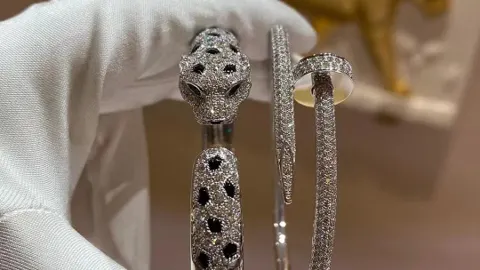
Why value-dense objects attract criminal interest
A diamond necklace, a steel sports watch or a rare handbag can hold a remarkable amount of value in a very small space. These objects travel easily, cross borders discreetly and can be turned into cash in many cities. Those qualities make them attractive to legitimate owners, but they also make them potentially useful to anyone seeking to disguise the origin of criminal money. Luxury goods can be bought with illicit funds and then pledged or sold, converting dirty cash into apparently clean proceeds with a plausible commercial story attached.
Pawnbrokers therefore sit at a point in the economy where the risk of money laundering is real. A pawn loan against a valuable item provides cash quickly, and the transaction appears routine. Criminals may also be tempted to use pledges to move value between people, or to test whether a lender asks awkward questions. For the honest customer, the result is a set of checks that can feel intrusive, but which exist to keep the system from becoming a convenient tool for those who would abuse it.
The legal framework behind the questions
Several pieces of legislation shape a pawnbroker’s approach to money laundering. The Proceeds of Crime Act 2002 creates the principal money laundering offences and imposes duties on businesses in the regulated sector to report knowledge or suspicion to the National Crime Agency through suspicious activity reports. The Terrorism Act 2000 contains parallel provisions on terrorist financing. The Money Laundering Regulations, most recently the 2017 regulations as amended, set out detailed requirements on risk assessment, customer due diligence, record keeping and staff training for businesses within their scope, including dealers in high-value goods.
Alongside these sits financial sanctions law, which prohibits dealing with the funds or economic resources of designated individuals and entities. A pawnbroker that lends against an item owned by a sanctioned person could breach those rules, whatever the commercial merits of the loan. Taken together, the framework requires firms to understand who they are dealing with, to think about the risks each transaction presents and to act when something does not add up. Regulators expect a risk-based approach, meaning more scrutiny where the risks are higher.
Knowing the customer
The first layer of any anti-money laundering programme is identification. A pawnbroker will usually ask for photographic identification such as a passport or driving licence, together with evidence of address, and will verify these details. For luxury pledges, where sums can be large, the lender may use electronic verification tools as well as examining documents in person. Identity checks also serve a second purpose, helping to deter theft and fraud, because someone attempting to pledge stolen property is less likely to do so if they must leave a clear record of who they are.
Where the customer is a company rather than an individual, the checks become more involved. The lender will need to understand who owns and controls the business, identify its beneficial owners and confirm that the person pledging the item has authority to act. Business owners sometimes use pawn loans to manage cash flow, and there is nothing unusual in that, but the lender must still be able to see through the corporate structure to the people behind it. Accurate, up-to-date company records make this process much smoother.
Source of funds, source of wealth and the questions that follow
For higher-value transactions, a luxury pawnbroker may ask how the customer came to own the item. The answer might be simple: bought new from a boutique, inherited from a relative, received as a gift or acquired from an auction house. Supporting evidence can include receipts, auction invoices, certificates, boxes and papers or a probate document. These questions are not an accusation. They form part of establishing that the item and the money behind it have a legitimate history, which is exactly what the law expects a careful firm to do.
Certain patterns may prompt closer attention. Examples include a customer reluctant to provide identification, a series of pledges that seem inconsistent with a person’s stated circumstances, items with removed serial numbers, requests to pay out to third parties or pressure to complete a transaction unusually quickly. None of these proves wrongdoing, and many have innocent explanations, but they are the kind of signals that trained staff are expected to notice. Where suspicion remains, the firm may be obliged to make a report, and may not be able to proceed.
Enhanced checks for higher-risk situations
The Money Laundering Regulations require enhanced due diligence in situations presenting a higher risk. One of the most common involves politically exposed persons, individuals entrusted with prominent public functions, along with their family members and close associates. Being a politically exposed person is not wrongdoing, but it can bring greater exposure to corruption risks, so firms must take additional steps such as establishing source of wealth and obtaining senior management approval. Transactions connected with countries identified as high risk also attract additional scrutiny.
Enhanced checks may also be triggered by the transaction itself, for instance where an item is of exceptional value, where the structure seems unnecessarily complex or where the explanation offered does not match the evidence. In the luxury segment, where individual loans can be large, lenders often build these procedures into their standard process rather than treating them as exceptions. For clients, this may mean a longer first appointment and requests for more documents, followed by a smoother experience on subsequent pledges once the relationship is established.
What the checks mean for honest borrowers
For the vast majority of customers, anti-money laundering checks are a brief administrative step. Bringing identification, proof of address and any purchase documentation for the item will usually satisfy the lender quickly. Borrowers should expect their information to be kept, since firms must retain customer due diligence records for a set period, typically five years after the relationship ends. A reputable pawnbroker will explain how data is stored and protected, and customers are entitled to ask about this under data protection law.
Occasionally a lender may decline a transaction or delay it without giving a full explanation. This can be frustrating, but staff may be legally restricted in what they can say, because tipping off someone about a report or investigation can itself be an offence. The best response is patience and cooperation. Checks of this kind protect legitimate owners by making it harder for criminals to exploit the market, and they help sustain the trust on which luxury pawnbroking, and the wider pre-owned luxury trade, ultimately depends.