
pawnbroking guide
Signed Jewellery: Why Cartier, Van Cleef & Arpels and Bulgari Borrow Better
Why signed pieces from Cartier, Van Cleef & Arpels and Bulgari attract stronger pawn loans than unbranded jewellery, and what lenders check first.
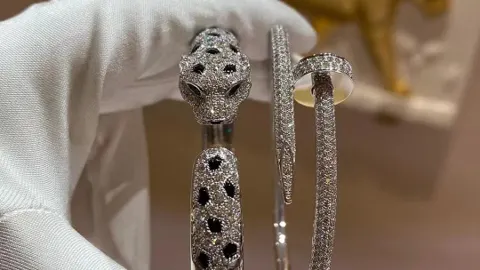
The value carried by a name engraved in gold
Turn over a bracelet from one of the great jewellery houses and you will usually find a signature: the maker’s name, a serial number, sometimes a purity mark and a hallmark. That small engraving can make a remarkable difference to value. An unsigned gold bangle is largely priced on weight, while a signed piece of comparable weight may sell for a multiple of its metal content, because buyers want the name, the design and the story behind it.
For a pawnbroker, that premium is attractive but only useful if it can be relied upon. The reason signed jewellery from certain houses tends to borrow better is not glamour for its own sake. It is that demand for particular pieces is deep, international and relatively predictable, which gives a lender confidence that the item could be sold at a strong price if a loan were not repaid. That confidence is ultimately what the borrower is paid for, in the form of a stronger loan.
Icons that the secondary market understands
Some designs have become so familiar that the pre-owned market almost prices them like commodities. Cartier’s Love bracelet, introduced in 1969 and fastened with a small screwdriver, is one; its Juste un Clou nail bracelet is another. Van Cleef & Arpels’ Alhambra motif, based on the four-leaf clover, has been produced in countless variations since the late 1960s. Bulgari’s Serpenti and B.zero1 designs are similarly recognisable. Each has been produced for decades in a range of metals and sizes, which has created a large and active pre-owned market with prices that dealers follow closely.
Recognisability matters because it shortens the path to a sale. A dealer or auction house knows exactly what a yellow gold Love bracelet in a given size is likely to fetch, and buyers search for these pieces by name. That liquidity allows a lender to value with confidence and to offer a larger proportion of resale value than it would against a unique, unsigned design whose market is uncertain. It also means comparable sales are easy to find, making the valuation less of a judgement call.
Why fakes make lenders forensic
The same popularity that makes signed jewellery bankable also makes it a favourite target for counterfeiters. Imitations of the best-known designs circulate widely, and some are made in solid gold with convincing engravings, which means a simple metal test is not enough. A specialist pawnbroker examines the proportions, weight, finishing, the style and depth of engraving, the screws or clasps, and the way the serial number is presented. Small details, such as the spacing of letters or the finish inside a bangle, often reveal more than the overall look.
Documentation strengthens the case considerably. Original boxes, certificates of authenticity, purchase receipts and service records from the house all help, although lenders know that paperwork can be forged too and treat it as supporting evidence rather than proof. Where doubt remains, a cautious lender may value the piece on metal and stones alone, or decline, until authenticity can be established more firmly. This is frustrating for owners of genuine pieces, which is why keeping paperwork together from the day of purchase is so worthwhile.
Condition, sizing and alterations
Signed jewellery is valued partly on its integrity as the house made it. Scratches on polished gold are expected and can usually be refinished, but dents, broken clasps, replaced stones or missing screws reduce value. Resizing by a non-authorised jeweller, or alterations such as adding diamonds to a plain design, can hurt the premium, because collectors and dealers prefer pieces in their original configuration. Some houses offer servicing, polishing and resizing, and records of such work carried out by the maker can support value rather than detract from it.
Size plays a part as well. Bangles, bracelets and rings are made in set sizes, and very large or very small examples may take longer to sell. A lender will consider whether a piece is in a popular size and material. Yellow, white and rose gold versions of the same design can also trade at slightly different levels, depending on current taste, so two apparently similar pieces may not attract the same offer. A lender will explain these differences if asked.
High jewellery and the limits of the premium
Not every signed piece benefits equally. The strongest premiums tend to attach to widely recognised collections with steady demand. Rare high jewellery from the same houses, with important stones, can be extremely valuable but is often priced primarily on its gemstones and then on the added cachet of the signature, which is best judged by specialists or at auction. Such pieces may require more time and expertise to value, and lenders may be cautious accordingly. In these cases the name is part of the story rather than the whole of it.
Vintage signed jewellery occupies its own niche. Earlier pieces from the major houses, particularly from the Art Deco period, can command considerable sums because of their design and rarity. Establishing authenticity and originality for older work is more demanding, however, and a lender may seek outside opinion before advancing a substantial sum against it. Original fitted boxes, early receipts and archive confirmation, where available, can add real weight to a claim of authenticity, and a lender will weigh them carefully alongside its own examination of the construction, marks and stones.
Borrowing against a signed piece sensibly
If you are considering a loan against signed jewellery, gather every document you have, clean the piece gently and note any alterations or repairs honestly. Ask the lender to explain whether its figure reflects the design premium or only metal and stones, and compare offers from more than one regulated pawnbroker, because experience with branded jewellery varies widely. Some pawnbrokers see signed pieces every day and know their markets intimately; others value mainly by metal and may not recognise a premium at all. Asking how an offer was reached is the simplest way to tell the difference.
As with any pledge, read the credit agreement carefully, including the redemption date and total charge for credit, and be clear about what happens if repayment becomes difficult. A signed piece is often among the easiest items to sell later, which is worth bearing in mind when deciding how much to borrow and for how long. Some owners conclude that they would rather sell a signed piece outright than borrow against it; EncoreLuxe offers private valuations for designer jewellery for those who wish to explore that route.