
pawnbroking guide
Exotic Leathers, CITES and Borrowing Against Crocodile Bags
Why crocodile, alligator and other exotic skin handbags need extra care at the pawnbroker, from CITES rules and species identification to paperwork.
The allure and the complication
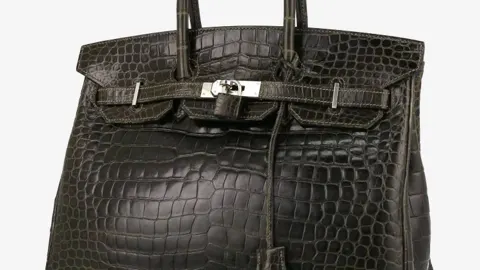
Exotic-skin handbags occupy the summit of the luxury leather market. A crocodile or alligator bag from a great house takes more time to make, requires skins of carefully matched scale pattern and represents a level of craftsmanship that few buyers ever encounter. At auction and in the resale market, the finest examples command prices well beyond their calfskin equivalents, which makes them potentially attractive as collateral for owners who need to borrow against a single valuable object.
Yet exotic skins bring a layer of complexity that ordinary leather does not. The animals from which they come are subject to international trade controls, and the law cares not only about whether a bag is genuine but about which species it comes from and how it was sourced. For a pawnbroker, that means additional checks, additional knowledge and, occasionally, additional reasons to decline. For a borrower, it means understanding why a lender may ask questions that would never arise with a canvas tote.
What CITES is and why it reaches the pawn counter
The Convention on International Trade in Endangered Species of Wild Fauna and Flora, known as CITES, was agreed in 1973 and came into force in 1975. It regulates international trade in listed species through a system of appendices. Appendix I covers species threatened with extinction, where commercial trade is tightly restricted; Appendix II covers species whose trade must be controlled to avoid overexploitation; Appendix III covers species protected by particular countries seeking cooperation. Many crocodilians and some lizards and snakes fall within these listings.
In the UK, CITES is implemented through domestic wildlife trade legislation, with the Animal and Plant Health Agency acting as the management authority. Crucially, the rules are not confined to border crossings. Commercial use of specimens from the most strictly protected category can require a specific certificate even within the country. A pawn loan that might end in the sale of an unredeemed pledge is a commercial context, so a lender must consider whether the bag could lawfully be sold before agreeing to lend against it.
Species, sources and why identification matters
The major luxury houses have long sourced skins from farmed or ranched populations operating within the CITES framework, and many commonly used species are listed in a category that permits regulated commercial trade. Saltwater crocodile, Nile crocodile and American alligator are among the skins most often seen in high-end bags, alongside lizard, ostrich and python. Their legal status is not identical, and it can differ by population, so accurate identification of the species is the first step in any assessment.
Identifying a skin is a specialist skill. Scale patterns, the presence or absence of small pores on belly scales, the shape of the tiles and the way the pattern graduates across the hide all offer clues. Some houses mark exotic bags discreetly to indicate the material. A lender that lacks this expertise may decline rather than risk misidentifying a skin, which is a sensible precaution rather than a judgement about the owner or the bag.
Paperwork that strengthens a pledge
Documentation carries more weight with exotic bags than with most other luxury items. An original receipt from a boutique helps establish when and where the bag was bought, and some purchases come with CITES-related paperwork, particularly if the bag has crossed borders. Owners who have travelled internationally with an exotic bag may have obtained permits or certificates at the time. Keeping these documents with the bag, rather than filing them away and forgetting them, can make a meaningful difference later.
Where paperwork is missing, a lender will consider the species, the likely age of the bag and the circumstances of acquisition. Items made before certain listings took effect may be treated differently, but proving age can be difficult. A cautious pawnbroker may reduce its offer to reflect the extra effort required to sell, or decline altogether if it cannot be confident of a lawful resale. Borrowers should expect these questions and see them as part of responsible practice rather than bureaucracy.
Condition issues peculiar to exotics
Exotic skins age differently from calfskin. Crocodile and alligator can dry out and develop fine cracks or lifting between scales if kept in a dry atmosphere, while excess moisture can cause spotting and distortion. Shiny finishes, achieved by polishing the skin, show scratches readily, and matte finishes can mark with water. Colour can fade unevenly in sunlight. Lizard is delicate, with scales that can lift at edges, and ostrich shows wear on its quill follicles differently from other leathers.
Restoration of exotic skins is specialised and costly, and not every repairer is equipped to do it well. A lender will consider whether defects can be corrected and at what expense, and whether any previous work has been done competently. It will also look closely at the matching of scales across the bag, since the finest pieces show careful symmetry. All of this feeds into a valuation that is often more nuanced, and sometimes more conservative, than for a comparable bag in ordinary leather.
Borrowing sensibly against a rare skin
For owners of genuine exotic bags with clear provenance, a specialist pawnbroker can be a practical source of short-term liquidity. The loan follows the same legal framework as any other pledge: a regulated agreement under the Consumer Credit Act 1974, a lender authorised by the Financial Conduct Authority and a redemption period of at least six months. What differs is the depth of due diligence and the range of lenders willing to take part, which may be narrower than for mainstream designer bags.
Owners should be prepared to answer questions about species, age and origin, and to bring whatever documentation they have. They should also think about how the bag will be stored during the loan, since exotic skins are sensitive to humidity and temperature, and ask the lender how it manages that. Reading the agreement carefully and comparing offers remains essential. The combination of rarity and regulation makes exotic bags a fascinating corner of the market, and one in which expertise matters more than almost anywhere else.