
pawnbroking guide
How Pawnbrokers Authenticate Designer Handbags
Inside the handbag authentication process at a specialist pawnbroker: materials, stitching, hardware, stamps, date codes and the limits of paperwork.
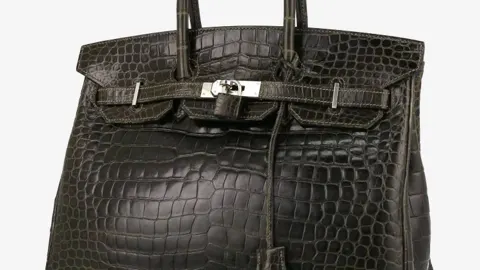
Why the lender carries the risk
When a pawnbroker lends against a handbag, it is effectively buying an option on that bag. If the loan is repaid, the bag goes home with its owner. If it is not, the lender must sell it to recover the money. A counterfeit pledge therefore turns a secured loan into an unsecured loss, and in the handbag market, where high-quality fakes are made in large numbers, that risk is real. Authentication is not a formality at the start of the process; it is the foundation of the entire transaction.
This is also why lenders are cautious about brands and models they do not know well. A pawnbroker that handles watches and diamonds every day may decline a bag it cannot authenticate confidently, not because it doubts the owner, but because its own expertise has limits. Specialist lenders employ staff who have handled hundreds or thousands of genuine bags, and it is that accumulated familiarity, rather than any single test, that allows them to spot the subtle wrongness of a well-made replica.
Reading leather, canvas and smell
The first assessment is often sensory. Genuine luxury leathers have a characteristic hand: the pebbling of a grained calfskin, the suppleness of lambskin, the crisp feel of a coated canvas. Counterfeiters have become adept at imitating the look, but the weight, flexibility and texture can still betray a substitute. Specialists will run their fingers along edges, feel the thickness of the hide and look at how the surface reflects light, which differs between finishes in ways a photograph rarely captures.
Smell is less scientific but surprisingly telling. New counterfeit bags can carry a chemical odour from glues and synthetic finishes, whereas genuine leather has a warmer scent that develops with age. Coated canvases such as those used by Louis Vuitton and Goyard have their own texture and print quality, and a specialist will check the alignment of patterns across seams, the sharpness of printed motifs and the way the canvas meets leather trim. Each observation is small; together they build a picture.
Stitching, edges and construction
Construction details are where many fakes fall down. The number of stitches per inch, their angle, the thread colour and the consistency of tension across a bag are all specific to a house and often to a model. Hermès saddle-stitching, done by hand with two needles, has a slight slant and a sturdiness that machine-made imitations struggle to reproduce. Chanel quilting should line up across the flap, back pocket and body. Irregular or wandering stitches invite closer scrutiny.
Edge finishing matters too. Painted or waxed edges should be smooth and even, without cracking or excess. Linings should be fitted cleanly, with pockets placed correctly and seams finished neatly. Specialists also look at the internal structure, such as how a bag holds its shape when empty and whether stiffeners are placed as expected. A replica may copy the obvious exterior features faithfully while cutting corners inside, where the manufacturer assumes few buyers will look.
Hardware, stamps and codes
Metal components are a rich source of evidence. Zips, clasps, feet, locks and chains should have the correct weight, finish and engraving for the brand and period. Zip pulls often carry specific branding, and the zip manufacturer used by a house may change over the years, which helps with dating. Plating that is too bright, too light or poorly engraved is a warning sign, as is a screw or rivet of the wrong type. Lenders will often weigh hardware against their knowledge of genuine examples.
Stamps and codes provide further clues. Many Louis Vuitton bags carry date codes indicating factory and period of manufacture; Hermès uses blind stamps denoting the year and craftsperson; Chanel has used serial stickers and, more recently, microchips. The font, depth and placement of heat stamps are all checked. But codes are copied as readily as logos, and a correct code on a wrong bag proves nothing. Specialists treat them as a cross-check that must agree with everything else.
Paperwork, technology and second opinions
Receipts, authenticity cards and boxes are welcome, but a careful pawnbroker never lets documents substitute for inspection. Paperwork can be forged, or genuine paperwork paired with a counterfeit bag. A receipt from the original boutique is useful context, particularly for establishing provenance and supporting anti-money laundering checks, yet the lender must still be satisfied that the bag in front of it is the bag on the receipt. Brands generally do not authenticate items for third parties, so the lender’s own expertise is decisive.
Some lenders supplement their judgement with magnification, ultraviolet light and digital tools that compare microscopic surface images against databases of genuine examples. These technologies can be helpful, but experienced authenticators tend to regard them as aids rather than arbiters. When a bag is unusual, very high in value or simply puzzling, a reputable lender may seek a second opinion from a specialist colleague or independent authenticator before making an offer, and will explain to the owner why it needs more time.
What a borrower can do to help
Owners can make authentication smoother by bringing everything that came with the bag: dust bag, box, cards, receipts, spare straps, padlocks and keys. Knowing roughly when and where the bag was bought is useful, and any history of repairs, particularly those carried out by the brand itself, should be disclosed. Transparency about restoration protects the owner as well as the lender, because undisclosed work discovered later can undermine confidence in the whole transaction.
It is also worth understanding that a lender declining to accept a bag is not an accusation. A pawnbroker may simply lack the expertise to be certain, or may find features it wants to investigate further. Borrowers who are unsure can seek an independent opinion first, and may find that a lender with deeper experience of a particular house is happy to proceed. Whatever the outcome, the same principle applies: in the handbag market, confidence in authenticity is the currency on which everything else depends.